
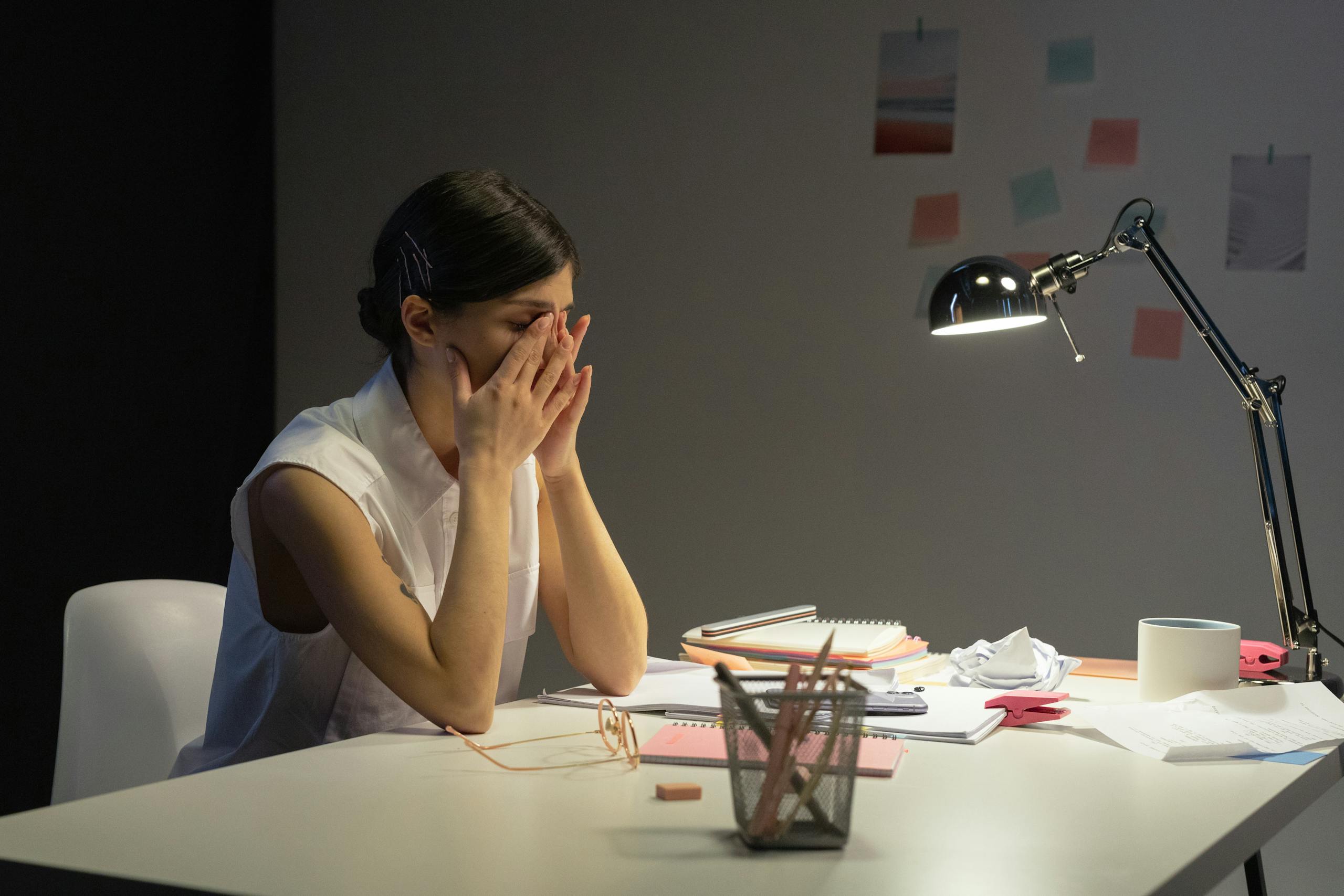
Most people are moving through life on baselines that were never meant to become permanent.
Exhaustion.
Hyper-vigilance.
Emotional shutdown.
Constant productivity.
The feeling that rest has to be earned before it is allowed.
Over time, many of these states become so familiar that we stop questioning them. We build routines around them. We learn how to function inside them. Eventually, we begin mistaking survival patterns for personality.
But the body keeps speaking.
For many women, especially those who have spent years carrying responsibility, pressure, caregiving, uncertainty, or emotional strain, the nervous system adapts to prolonged stress in ways that can feel deceptively normal. What may have started as a temporary survival response slowly becomes the atmosphere of everyday life.
Always bracing.
Always anticipating.
Always managing.
Always recovering while still moving.
At some point, exhaustion stops feeling alarming and simply starts feeling familiar.
I think that is one of the quietest dangers of prolonged survival mode. Not the intensity of it at the beginning, but how easily it settles into the background until it begins shaping identity.
People start describing themselves through the language of depletion.
“I’m just someone who overthinks.”
“I’ve always been anxious.”
“I’m bad at resting.”
“I’m the strong one.”
“I can handle a lot.”
And sometimes those things feel true because the body has been carrying them for so long.

But not every long-standing pattern is meant to become a permanent way of living.
Sometimes the body is not expressing personality at all. Sometimes it is expressing accumulated strain.
The constant tiredness.
The inability to slow down.
The sense of always being emotionally guarded.
The difficulty receiving care without guilt.
The feeling that stillness itself is uncomfortable.
These things do not appear in isolation. They often point toward lives that have required too much vigilance for too long.
That realization changes the way you begin relating to yourself.
You stop approaching exhaustion as a personal failure to manage better. You begin asking different questions instead.
What has my body adapted to?
What have I normalized?
What would rest actually feel like if I stopped treating it as a reward?
I think many women are quietly trying to answer those questions right now.
Not because they want to abandon ambition, responsibility, or strength, but because they are beginning to realise that living in a constant state of internal pressure is not the same thing as living well.
And perhaps softness has less to do with aesthetics than people imagine.
Perhaps softness is simply what becomes possible when the nervous system no longer feels like it has to remain on guard all the time.
That kind of change rarely happens overnight.
But awareness is often where it begins.